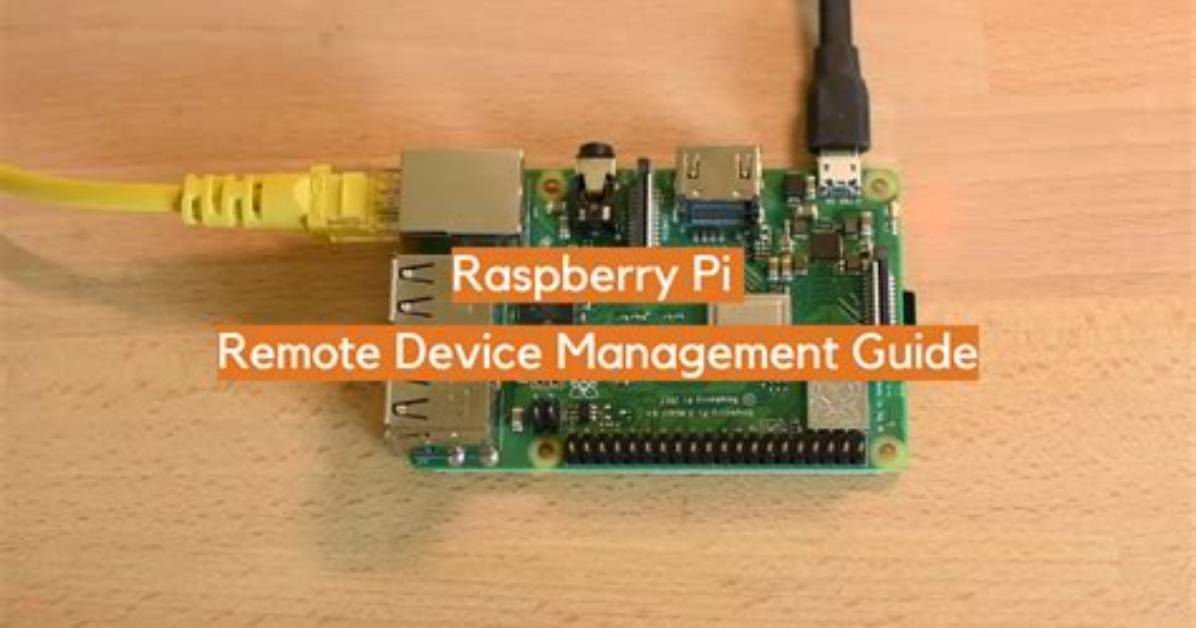
Managing Raspberry Pi devices remotely has become a crucial aspect of modern IoT solutions. As businesses and individuals increasingly adopt IoT technologies, the ability to control and monitor these devices from afar is no longer a luxury but a necessity. Whether you're setting up a home automation system or managing a large-scale industrial IoT network, understanding how to manage Raspberry Pi devices remotely can significantly enhance efficiency and scalability.
IoT (Internet of Things) has revolutionized the way we interact with technology. At the heart of many IoT applications lies the versatile Raspberry Pi, a compact single-board computer that serves as the foundation for countless projects. However, managing Raspberry Pi devices manually can be time-consuming and impractical, especially when dealing with multiple units spread across various locations. This is where remote IoT management platforms come into play.
This article explores the concept of managing Raspberry Pi devices remotely using IoT management platforms. We will delve into the tools, techniques, and best practices that enable seamless remote management. By the end of this article, you'll have a comprehensive understanding of how to leverage IoT management platforms to control your Raspberry Pi devices efficiently.
What is Raspberry Pi?
Raspberry Pi is a series of small single-board computers developed by the Raspberry Pi Foundation. Originally designed to promote computer science education, Raspberry Pi has since become a popular choice for hobbyists, developers, and businesses alike. Its affordability, versatility, and open-source nature make it ideal for a wide range of applications, from home automation to industrial IoT deployments.
Raspberry Pi devices are equipped with powerful processors, multiple interfaces, and support for various operating systems. They can be programmed to perform tasks such as data logging, sensor monitoring, and even artificial intelligence applications. However, the true potential of Raspberry Pi is unlocked when it is managed remotely, enabling users to control and monitor devices from anywhere in the world.
Understanding the basics of Raspberry Pi is essential for anyone looking to implement remote management solutions. Whether you're new to Raspberry Pi or an experienced user, this section provides a foundation for the rest of the article.
Raspberry Pi Specifications
- Processor: Broadcom BCM2837B0, Cortex-A53 (ARMv8) 64-bit SoC @ 1.4GHz
- RAM: 1GB, 2GB, 4GB, or 8GB LPDDR4-3200 SDRAM
- Connectivity: Dual-band 2.4GHz and 5GHz IEEE 802.11b/g/n/ac wireless LAN, Bluetooth 5.0, BLE
- Ports: USB, HDMI, Ethernet, GPIO
Benefits of Remote Management for Raspberry Pi
Managing Raspberry Pi devices remotely offers numerous advantages. Firstly, it eliminates the need for physical access to the device, saving time and resources. Secondly, remote management enables real-time monitoring and control, allowing users to respond quickly to changes or issues. Lastly, it enhances scalability, making it easier to manage multiple devices simultaneously.
Key benefits include:
- Increased efficiency through automation
- Reduced downtime with proactive monitoring
- Cost savings by minimizing on-site visits
- Enhanced security through centralized management
These benefits make remote management an essential component of any IoT deployment involving Raspberry Pi devices.

